
Page Banner
Air Cons
heating and air conditioning

Why do so many Victorian households and businesses still cling to old ducted gas heaters or creaky electric resistance systems?

The answer is often simple: habit.

For decades, gas was sold as “cheap and reliable,” while electric heaters filled the gaps when budgets were tight. But today, those outdated systems are the very culprits behind soaring energy bills and uncomfortably high carbon emissions.

Your ancient ducted gas unit might be draining your wallet. Enter the Victorian Energy Upgrades (VEU) program. A powerful government initiative towards energy efficiency and sustainability that’s changing the way Victorians heat and cool their homes. Backed by rebates, this scheme is transforming heating and air conditioning from an expensive burden into an opportunity for long-term energy savings and comfort.

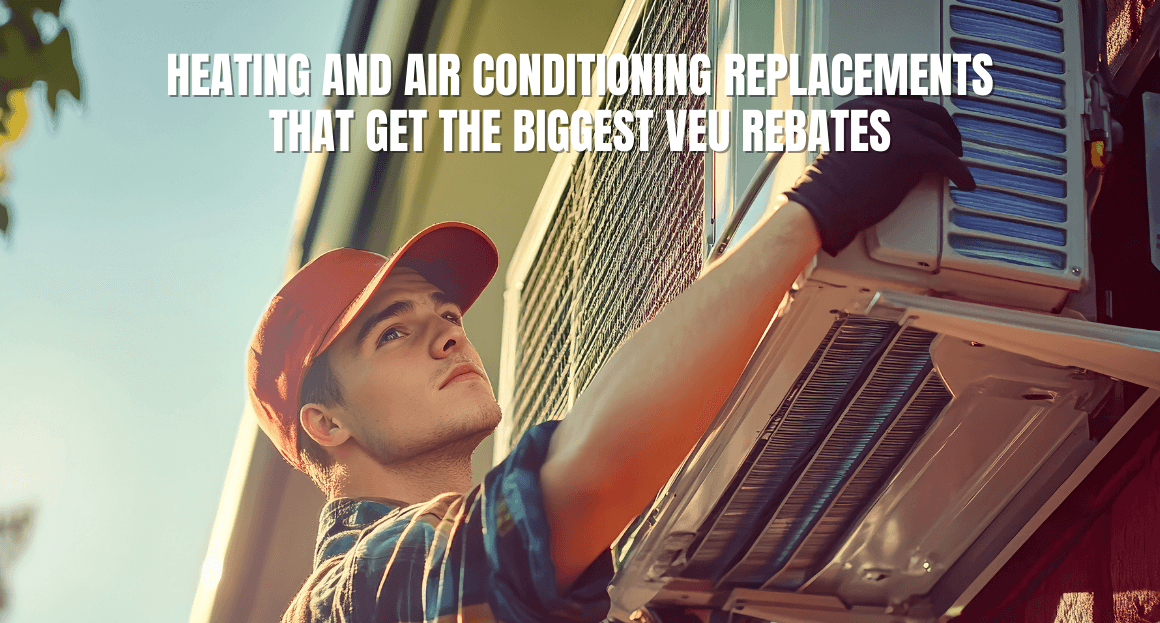
The big question we’ll tackle today is this: Which heating and air conditioning replacements unlock the biggest rebates and why? By the end of this blog, you’ll know exactly how much you could save, what systems make sense for your property, and why now might be the perfect moment to replace rather than repair.

The True Cost of Old Heating and Cooling

Outdated heating and cooling systems are inefficient and financially reckless. A ducted gas heater can burn through more than a third of a household’s annual energy bill. Electric resistance ducted heaters are even worse, devouring electricity at a high rate.

  • Running bills:Families can overpay thousands each year simply because their system was installed in an era when energy was cheaper.
  • Maintenance headaches:Older systems require constant repairs, eating into budgets and disrupting comfort.
  • Carbon footprint:Heating is Victoria’s single largest contributor to household greenhouse gas emissions, meaning sticking with inefficient systems accelerates climate impacts.

If you are using an old ducted gas heater. Along with facing high bills, you ‘ll have issues due to poor indoor air quality as the outdated system distributes uneven heat and stale airflow. The alternative is a VEU-backed reverse cycle unit that can cut running costs and also keeps air quality good with its modern tech features.

3. How Rebates Work?

You can replace inefficient appliances with high-efficiency heating and cooling systems and receive government-backed discounts.

Here’s how it plays out:

  • Eligibility:All Victorian households and businesses qualify, including private rentals.
  • Minimum contributions:Rebates are generous, but not entirely free. Households must contribute at least $200 for split systems under 10kW, and $1,000 for ducted systems or multi-splits.
  • VEEC certificates:Rebates are calculated using Victorian Energy Efficiency Certificates (VEECs), which fluctuate in value depending on market demand. This is why rebate amounts differ slightly across providers.
  • Warranty:Minimum 5-year warranty, protecting your investment long term.

By incentivising efficient heating and air conditioning, the Victorian government reduces statewide emissions while helping households wrest back control of their bills. But rebates won’t always be this high; certificate prices change, and future governments may tighten schemes. So grab the offers while they exist.

Replacement Types

1. Hard-Wired Electric Room Heaters to Reverse Cycle AirCons

Electric resistance room heaters are the dinosaurs of the heating world. They guzzle electricity, warm only a small space, and turn bills into something resembling a ransom note.

Replacing them with a reverse cycle air conditioner can earn rebates of up to $840 for households and $490 for businesses. Reverse cycle units don’t generate heat by brute force; instead, they move it, making them three to five times more energy efficient. One kilowatt in can deliver up to five kilowatts of heating or cooling your home.

It’s a straightforward replacement with immediate payback that is lower bills, a safer system, and all-season comfort.

2. Non-Ducted Gas Heaters to Split System AC

Gas once carried the reputation of being affordable. But with prices climbing steadily, gas is no longer the bargain it once was. Non-ducted gas heaters, often seen in older Victorian homes, are now a quiet drain on household budgets. VEU rebates for swapping these with split systems range from $630 to $1,610 for homes and $420 to $1,050 for businesses.

Beyond comfort, the shift is environmental. Gas heaters directly emit carbon into homes and the atmosphere. Reverse cycle systems eliminate this, instead using refrigerants to distribute heat efficiently with dramatically lower greenhouse emissions.

3. Ducted Gas Heating to Multi-Split or Ducted Reverse Cycle

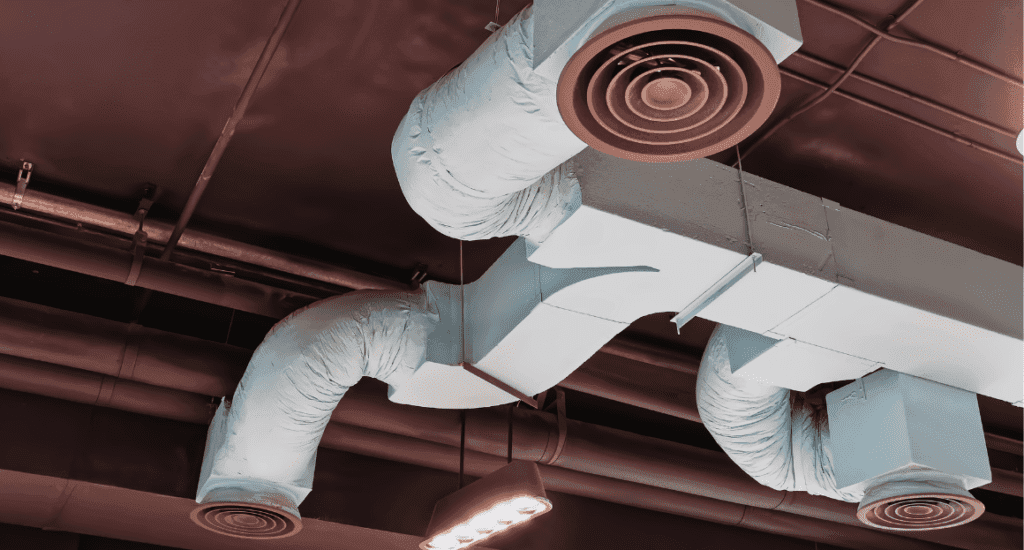
Ceiling-mounted ducted air conditioning vents in a commercial building, showing a ducted reverse cycle system used for heating and cooling.

This is where rebates reach their peak. For homeowners, swapping ducted gas heating for multi-split or ducted reverse cycle air conditioning can attract rebates of up to $5,530. For businesses, the figure soars to $8,820.

Why? Because ducted gas heating is one of the costliest systems to run. Upgrading to a ducted reverse cycle air conditioner with zoning means you only heat or cool the rooms in use.

Ducted reverse cycle systems are considered the “gold standard”: whole-home comfort, cutting-edge efficiency, and seamless integration with existing ducted systems. The upfront cost is higher, but with rebates and long-term energy savings, the equation becomes compelling.

4. Central Electric Resistance Ducted Heater to Ducted Reverse Cycle

If there’s a villain in the story of inefficient heating, it’s the central electric resistance ducted heater. These systems are energy hogs.

Fortunately, the VEU program offers some of the highest rebates here: up to $5,460 for homes and $4,060 for businesses.

Along with annual electricity costs being dropped by over $4,000, which is savings that compound each year.

Environmentally, the gains are immense, too. Replacing one old electric ducted heater can prevent tonnes of greenhouse gases from entering the atmosphere annually, making it a meaningful contribution to Victoria’s climate goals.

Special Cases: No Decommissioning Replacements

Not every household has an old system to scrap. For these cases, the VEU program still provides rebates, albeit smaller, ranging from $70 to $490, depending on the system size.

It’s a softer entry point for households new to rebates, offering a discount on installing a reverse cycle air conditioner even without a decommissioned unit. Think of it as the government nudging you towards efficiency.

Right Replacement for Your Property

The right heating and air conditioning system depends on:

  • Property size:Apartments often benefit from single split systems, while large family homes may justify ducted or multi-splits.
  • Usage patterns:Seasonal use vs. 24/7 heating shifts the economics of different systems.
  • Budget:Factor in the minimum contribution and weigh it against the prices of Split System Air Conditioners.
  • Warranty & quality:Install VEU-approved products.

We supply quality products registered under the VEU guidelines, and with years of experience designing and installing heating and cooling systems. Your best bet is consulting Eco Foot. We’ll weigh your property’s needs against rebate opportunities to maximise returns.

VEU Rebates

Businessman in a suit holding Australian dollar banknotes, symbolising government rebates and financial savings from energy upgrades.

Each rebate-backed upgrade contributes to statewide emissions reductions while preparing your homes against volatile gas and electricity markets. Rental properties stand out as an opportunity. With eligibility extending to private rentals, landlords can boost property value and tenant satisfaction while benefiting from subsidised upgrades.

Rebates are generous now, but VEEC prices fluctuate. As more households and businesses participate in the program, the value of rebates may decrease. So don’t wait, replace now when the rebates are high.

FAQs

  • What is the difference between ducted heating and split system air conditioning?

Ducted heating can distribute warm air throughout the entire home via ducts, while split systems cool or heat individual rooms. The right system depends on your home size, budget, and comfort style.

  • How often should I service my heating and cooling system?

Have yours serviced at least once a year to maintain efficiency, prevent breakdowns, and ensure clean indoor air quality. It keeps the system sharp, air clean, and breakdowns at bay.

  • Are there government rebates available for heating and cooling upgrades in Victoria?

Yes, the VEU scheme in Victoria offers incentives for energy-efficient upgrades, such as reverse cycle air conditioners, heat pumps, and hot water systems.

  • Is ducted heating or split system air conditioning cheaper to run in Melbourne?

Split systems are usually best for small spaces, while ducted systems pay off in larger homes. Costs hinge on efficiency, insulation, and usage habits.

  • Do heating and cooling systems in Melbourne need special consideration for local weather?

Definitely. With its unpredictable climate conditions, most Victorians lean on reverse cycles for year-round ease.

Other Related Blog

new-start-your-journey-img

Start Your Journey To Energy Independence!