

 Lighting
Read more
Step 1: Understand Your Current Lighting Costs
Before planning any budget, you need to know what your current lighting is actually costing you. This baseline becomes the reference point for calculating savings, rebates, and payback period.
Here’s what to review in detail:
Number of existing fittings
Count every light currently installed, including warehouse high‑bays, office panels, outdoor floodlights, and car‑park lighting. Many Victorian sites underestimate this, especially older factories and mixed‑use buildings.
Wattage per fitting
Check the rating on each fixture (for example: 36W fluorescent, 400W metal halide). Older technology uses significantly more power than modern LED lighting for commercial buildings.
Daily operating hours
Is lighting running 8 hours, 12 hours, or 24/7? Warehouses in areas like Truganina, Laverton, and Dandenong South often operate extended shifts, dramatically increasing energy costs.
Maintenance frequency
Include lamp replacements, ballast failures, labour call‑outs and access equipment hire. These hidden costs are often forgotten but form a large part of your true lighting spend.
Electricity tariff
Commercial electricity rates in Victoria commonly range from $0.24 to $0.35/kWh, depending on your contract and network area. This directly impacts savings potential.
Example:
A typical Victorian warehouse might have:
- 150 metal‑halide lights
- 400W each
- Running 10 hours/day
Annual energy use:
150 × 0.4 kW × 10 × 365 = 219,000 kWh/year
At $0.28/kWh:
➡ ~$61,000 per year in lighting electricity alone
Once businesses see this figure, LED upgrades quickly move from “optional” to “urgent”.
Step 2: Identify Your Building Type (Cost Profiles Differ)
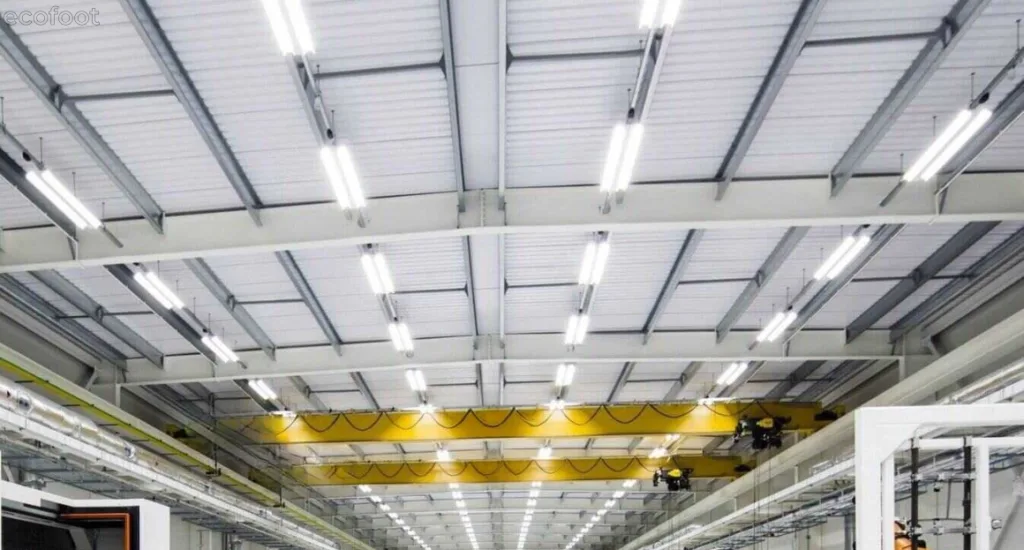
Every commercial building uses lighting differently. Your budget should reflect how your space actually operates, not just how many lights you have.
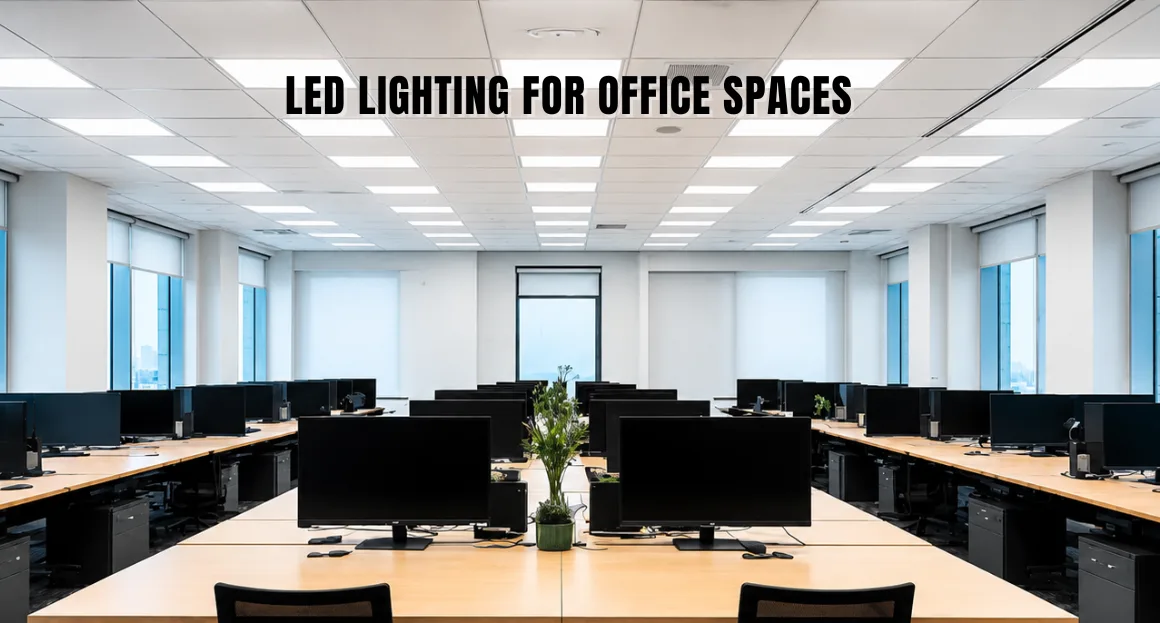
Offices & Retail
These spaces usually involve:
- Lower‑wattage fixtures
- Large quantities of ceiling lights
- Visual comfort requirements (low glare, even brightness)
- Customer‑facing presentation
For example, a retail store in Melbourne CBD or a shopping centre may have 300–500 small fittings. Each fitting is inexpensive, but installation labour and controls add up quickly.
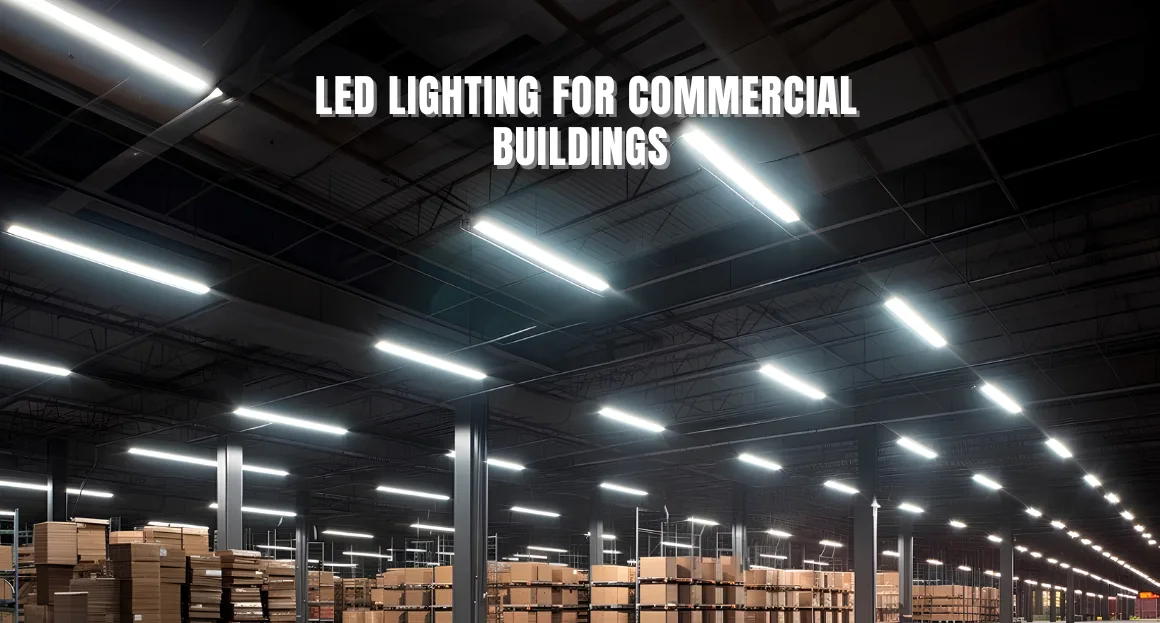
Warehouses & Factories
Industrial sites typically include:
- High‑bay LED fixtures
- Fewer lights, but higher wattage
- Tall ceilings requiring scissor or boom lifts
- Long operating hours
A logistics centre in Derrimut or Dandenong South might only have 120 lights, but each one costs several times more than an office fitting to supply and install.
Car Parks & Outdoor Areas
These areas require:
- Weather‑rated fixtures
- Heavy cabling
- Trenching or elevated mounting
- Sensor integration for safety and compliance
Understanding your building category early prevents unrealistic budgets and unexpected variations later.
Step 3: Break Down the True Cost of a Commercial LED Project
Many Victorian businesses budget only for the lights themselves. Unfortunately, this often leads to cost overruns and project delays.
A realistic commercial LED budget starts with the core system itself — the fixtures and controls. This includes commercial‑grade battens, panels, high‑bays, and floodlights fitted with long‑life drivers, and designed to work seamlessly with dimming and daylight harvesting systems. Higher‑quality fixtures may cost more upfront, but they dramatically reduce breakdowns, replacements, and maintenance over time. Alongside the fixtures, smart lighting controls such as daylight sensors, motion sensors, zoning controllers, and system programming play a major role in achieving the best lighting for commercial energy efficiency, increasing energy savings and strengthening eligibility for commercial energy rebates in Victoria.
Installation and long‑term operation form the second major part of the budget. Labour costs vary depending on ceiling height, site access, working‑at‑heights requirements, and whether work must be completed after hours to avoid disrupting business operations — a small office upgrade may take a couple of days, while a large warehouse can run for weeks. Compliance and documentation also need to be factored in, particularly for projects using the Victorian Energy Upgrades program, which requires product approvals, installation records, and energy‑savings calculations. Many Victorian businesses choose to work with experienced local providers such as Eco Foot to manage installation coordination and rebate paperwork as part of the overall project, helping reduce administrative burden and avoid costly compliance mistakes. Ongoing costs, including driver replacements, occasional system recalibration, and emergency call‑outs, should also be included in early planning to keep long‑term budgets realistic.
Step 4: Use the VEU Program to Reduce Capital Cost
The Victorian Energy Upgrades (VEU) program is one of the strongest commercial LED lighting incentive schemes in Australia.
Instead of waiting months for a rebate cheque, businesses receive:
➡ Instant discounts applied to the upgrade invoice
How it works in practice
- Energy savings are calculated
- Victorian Energy Efficiency Certificates (VEECs) are generated
- The value of those certificates is deducted from your project cost
For many Victorian commercial buildings:
- 40%–80% of hardware costs are covered byEco Foot
- Labour is partially offset
- Some upgrades approach near‑zero upfront cost
If you operate in Melbourne, Geelong, Bendigo, or regional VIC, always confirm VEU eligibility before finalising your budget.
Step 5: Typical Budget Ranges in Victoria
Budget ranges vary depending on ceiling height, site access, controls, and fixture quality. Below are realistic planning figures for commercial projects in Victoria before rebates:
Offices / Retail
- $45 – $110 per fitting installed
Includes panels or battens, basic labour, and compliance paperwork.
Warehouse High‑bays
- $180 – $420 per fitting installed
Higher costs reflect lifting equipment, industrial fixtures, and safety requirements.
Outdoor Floodlights
- $220 – $600 per fitting installed
Includes weatherproof fixtures, mounting hardware, and cabling.
Typical pricing after VEU rebates
- Offices: $15 – $60 per fitting
- Warehouses: $70 – $220 per fitting
- Outdoor: $90 – $300 per fitting
If your quote is far outside these ranges, request a detailed breakdown.
Step 6: Budget for Controls – Not Just Lights
Many Victorian businesses hesitate when controls are mentioned.
“Do we really need sensors?”
In most cases, yes.
Controls can decide how efficiently a commercial lighting system performs. By dimming lights when natural daylight is available, automatically switching off in unused areas, and maintaining consistent brightness across different zones, controls ensure that energy is used only where and when it is needed. These features not only improve everyday comfort and visibility but also strengthen eligibility for government incentives by increasing the total energy savings measured under programs such as the Victorian Energy Upgrades scheme.
Financial impact
- Adds 8–15% to project cost
- Improves energy savings by 15–35%
- Increases VEU certificate value
Example
An office upgrade costing $30,000 might add $3,000 in controls, but save an extra $6,000 per year in electricity. So the controls pay for themselves in six months.
Step 7: Calculate Payback Period Correctly
Payback period is the time it takes for savings to recover your upgrade cost.
A proper calculation should include:
- Electricity savings
- Reduced maintenance costs
- Rebate value
- Additional savings from controls
Example (Melbourne factory)
- Upgrade cost after rebate: $38,000
- Annual electricity savings: $21,000
- Maintenance savings: $3,000
Total annual savings: $24,000
Payback:
38,000 ÷ 24,000 = 1.6 years
Everything after that is a profit year after year.
Common Budgeting Mistakes in Victoria
Many local projects still fall into these traps:
- Planning before checking rebate eligibility
- Using residential‑grade fixtures from retail stores
- Ignoring access equipment costs
- Skipping controls to “save money”
- Comparing quotes without energy modelling
- Choosing the cheapest hardware over the lifecycle cost
If you’ve been quoted wildly different prices by different installers, this is usually why.
Build a Safe Commercial Lighting Budget
Use this checklist when planning:
- Full lighting audit
- Energy modelling
- Rebate pre‑assessment
- Control strategy
- Access method planning
- Warranty comparison
- Maintenance forecast
- ROI calculation
Eco Foot will walk you through these.
Budgeting for Multi‑Site Businesses
If you manage multiple locations across Victoria:
- Standardise fixture types
- Bundle upgrades
- Negotiate volume pricing
- Stage installations
- Centralise rebate processing
Retail chains and logistics companies often reduce total project costs by 15–30% this way.
When It Makes Sense to Spend More Upfront
Spending more upfront on a commercial LED upgrade can be a smart financial decision in the right circumstances. This is especially true when your lighting operates for more than ten hours a day, when installation access is difficult or disruptive to normal business operations, or when the site plays a critical role in daily productivity or safety. In these environments, higher-quality fixtures, reliable drivers, and well-designed control systems reduce the risk of breakdowns and minimise costly downtime, making the additional upfront investment worthwhile.
It also makes sense to prioritise quality when electricity tariffs are high or when sustainability reporting and building performance ratings matter to your business or tenants. While cheaper systems may appear attractive initially, they often lead to higher maintenance costs, more frequent failures, and lower energy savings over time. Over a typical five- to ten-year operating period, these hidden costs can easily exceed the original price difference, making the “cheapest” option often the most expensive in the long run.
2026 Market Trends Affecting LED Budgets in Victoria
- Rising electricity tariffs
- Higher minimum efficiency standards
- Greater use of smart controls
- Stricter rebate compliance checks
- Energy ratings affecting leasing decisions
All of these push smart businesses toward quality, controls, and rebates, not just low upfront cost.

A well-planned lighting budget reduces capital risk, maximises the value of VEU incentives, shortens payback periods, improves overall energy performance, and protects system reliability for years to come.
If you are planning a commercial lighting upgrade anywhere in Victoria, Eco Foot is a trusted local provider specialising in rebate-approved LED lighting solutions and compliant installations. Our team will assess your site, estimate rebate eligibility, and design a cost-effective upgrade that delivers both immediate savings and long-term performance. Reaching out early can make a big difference to how much your project ultimately costs and how quickly it pays for itself.
VEU Disclaimer:
Rebate availability and values under the Victorian Energy Upgrades program are subject to eligibility, approved products, installation and program changes. All figures are indicative only and should be confirmed during project assessment.
FAQs
- Commercial lighting upgrade for office spaces in VIC?
Yes. Eco Foot delivers VEU-eligible commercial upgrades for offices: we start with an audit, specify rebate-approved products, design controls (daylight/motion), and apply the VEU discount up front through VEECs. - How do you choose the best LED panels?
Pick panels by required lux and lumen output, high efficacy (lm/W), CRI ≥80–90 for accurate colour, appropriate CCT (≈4000K for offices), low UGR for glare control, and confirmed dimming compatibility (DALI/0–10V); We help you choose rebate-approved products. - Free VEU LED lighting upgrade for Victorian households?
No, residential lighting incentives were removed from the VEU (effective 1 Feb 2023), so free residential LED replacements under VEU are no longer available. Commercial projects remain eligible. - Why LED panels?
LED panels give uniform, low-glare light for office spaces, use far less energy than legacy lamps, run cooler (reducing HVAC load), have long lifespans, and integrate well with dimming and daylight-harvesting controls for better savings. - Will the rebate reduce my cost upfront, or do I claim it later?
Rebates are applied as an upfront discount on your invoice. You don’t need to wait for a reimbursement or lodge a claim yourself. You only review and approve the final upgrade details. Eco Foot handles the certificate process.
VEU Disclaimer: Rebate availability and values under the Victorian Energy Upgrades program are subject to eligibility, approved products, installation and program changes. All figures are indicative only and should be confirmed during project assessment.
Other Related Blog
 Lighting
 Commercial solar rebate eligibility Victoria businesses are checking right now has shifted in 2026. The Victorian Energy Upgrades (VEU) commercial solar discoun
 Lighting
 Rising energy bills, increasing stakeholder expectations, ESG reporting obligations, and stricter building performance standards are pushing commercial property
 Lighting
 Commercial LED lighting for offices through the Victorian Energy Upgrades (VEU) program is making workplaces brighter, more comfortable, and far cheaper to run
 Lighting
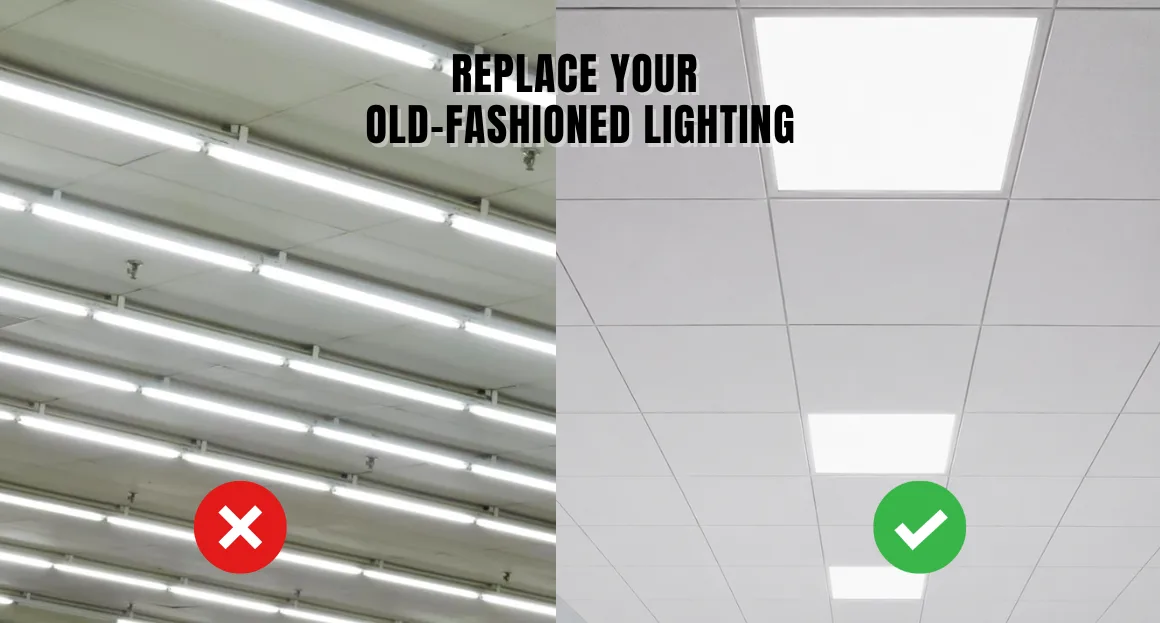
 Businesses are now working with a mix of lighting systems. Some properties still run on old fluorescent fittings, while others have halogens, CFLs, metal-halide
Lighting In most cases, existing LED fittings cannot be replaced again under the same rebate category. However, that does not always mean the entire property becomes
 Lighting
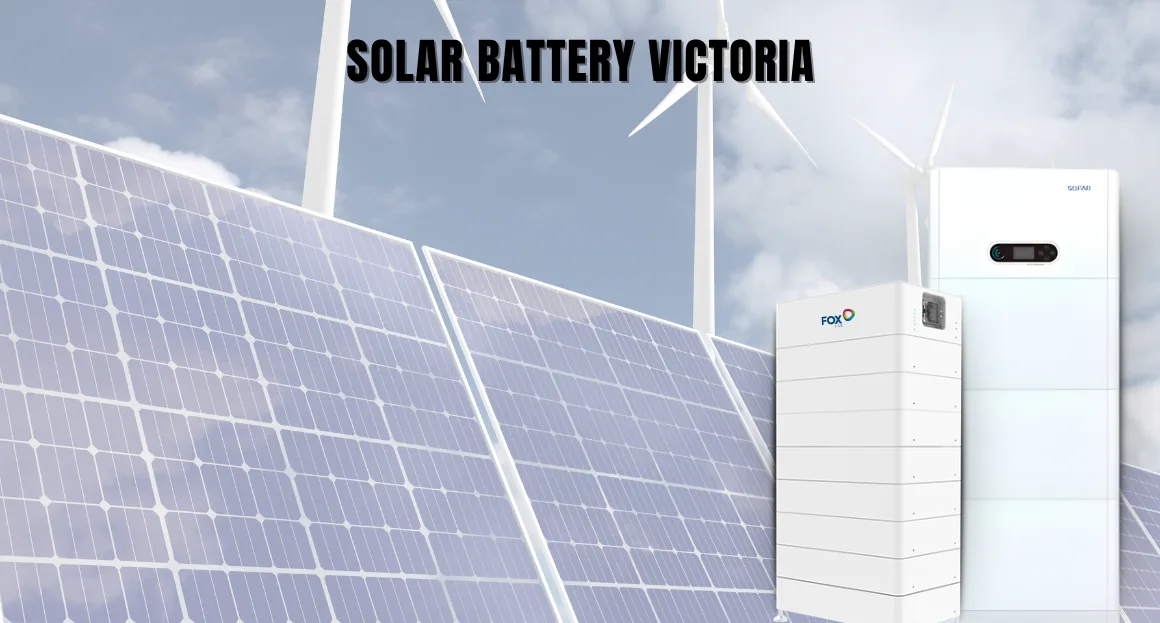
 If you’re a homeowner in Victoria trying to figure out whether battery storage is worth it, these are the same things you should know, too. Is there a battery


Start Your Journey To Energy Independence!
Eco Foot does not authorise unsolicited door-to-door visits, telemarketing calls, or other direct personal contact unless it has been officially arranged or authorised.If you receive an unsolicited visit or call from anyone claiming to represent Eco Foot, please report to us directly so we can investigate and take appropriate action.
