
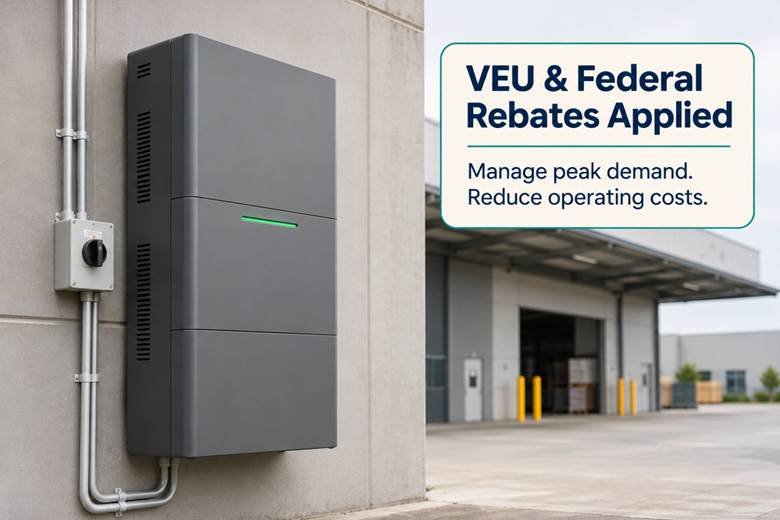
 Lighting
Victoria has become one of Australia’s most active commercial battery markets. With rising operational costs, businesses are looking to battery storage to manage peak demand and reduce energy bills. But with so many brands competing for attention, which ones actually offer the best value for Victorian businesses?
This guide breaks down the real costs, the federal rebate structures, and the brands that deliver the strongest ROI for commercial premises.
The Federal Rebate: What Changed on 1 May 2026
The federal Cheaper Home Batteries Program provides a discount of approximately 30% on eligible battery systems installed with new or existing commercial solar. The discount is delivered through Small-scale Technology Certificates (STCs) or Large-scale Generation Certificates (LGCs), applied at the point of sale by your accredited installer.
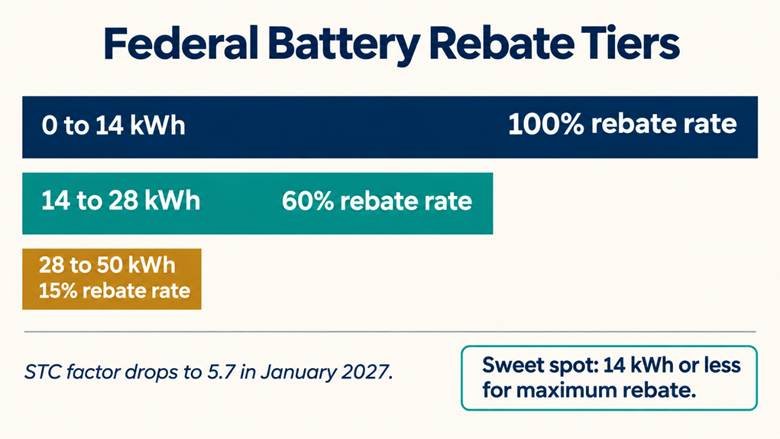
The program was expanded in December 2025 from original estimates of $2.3 billion to an estimated $7.2 billion over four years. From 1 May 2026, the STC factor is tiered according to battery capacity.
| Usable Capacity | STC Factor Applied |
| 0 to 14 kWh | 100% |
| 14 to 28 kWh | 60% |
| 28 to 50 kWh | 15% |
The STC factor itself also declines over time. For 2026, the factor for May to December is 6.8. It drops to 5.7 in January 2027, then continues declining every six months until the program ends in 2030.
The practical takeaway for procurement: The first 14 kWh of battery capacity receives the full rebate rate. Capacity beyond 14 kWh is discounted significantly. If you are sizing a battery for your business, the sweet spot for maximum rebate value is 14 kWh or less.
What Batteries Actually Cost in Victoria After Rebates
Here are real capital expenditure costs for Victorian businesses in 2026, with the federal rebate applied. Prices exclude GST. ROI depends on your operational hours and peak tariff avoidance.
| Battery Size | Capital Expenditure (Before Rebate) | Federal Rebate (Approx) | Net Capital Expenditure After Rebate |
| 10 to 13 kWh | $11,000 to $15,000 | ~$3,300 to $4,500 | $7,700 to $10,500 |
| 15 to 20 kWh | $15,000 to $18,000 | ~$4,500 to $5,500 | $10,500 to $12,500 |
| 20 to 30 kWh | $18,000 to $24,000 | ~$4,800 to $5,900 | $13,200 to $18,100 |
What may cost extra:
- Hybrid inverter upgrade ($2,500 to $3,500 if your existing inverter is not compatible)
- Switchboard upgrade ($1,000 to $1,500)
- Backup circuit wiring for blackout protection ($300 to $600)
- Additional cable runs or trenching
- Professional installation ($2,000 to $2,500 added to battery unit cost)
- AC-coupled retrofit ($1,000 for separate battery inverter)
DNSP pre-approval timeline: 5 to 10 business days.
Cost per usable kWh falls as battery size increases. However, this only delivers value if your facility actually uses the capacity to offset peak tariffs. Oversizing beyond your operational load reduces your ROI.
Which Battery Brands Offer the Best Value?
Value for a business means minimising capital expenditure while maximising peak-shaving capability. The most important question is which brand matches your existing solar inverter and your facility’s load profile. Here are the three brands Eco Foot installs and prices.
Growatt
Growatt offers strong value in the 20 to 30 kWh range. Pricing from our current sheets:
- 30 kWh, 10 kW inverter, no panels: $4,400 to $5,450
- 30 kWh with 6.65 to 10.45 kW solar: $4,999 to $13,500
- 40 kWh with 7.6 to 8.449 kW solar: $7,400 to $8,449
Best suited to: Businesses wanting large capacity at a competitive capital cost.
GoodWe
GoodWe covers a wide range of configurations from 24.96 kWh up to 51.2 kWh. Pricing from our current sheets:
- 24.96 kWh, 9.9 kW inverter, no panels: $8,737
- 32 kWh, 9.9 kW inverter: $5,999
- 33.28 kWh, 9.99 kW inverter: $7,400
- 24.96 kWh, 5 kW inverter: $5,699
- 28.8 kWh with 6.65 kW solar: $8,900
- 32 kWh with 9.9 kW inverter: $9,950
- 24.96 kWh with 9.975 kW solar: $8,950
- 38.4 kWh, 25 kW inverter: $9,299
- 51.2 kWh, 25 kW inverter: $11,999
Best suited to: Commercial sites requiring flexibility across single-phase and three-phase setups.
SOFAR
SOFAR offers competitive pricing on 30 kWh and larger systems. Pricing from our current sheets:
- 30.72 kWh, 5 kW inverter: $6,800 to $8,605
- 30.72 kWh with 6.65 kW solar: $4,399 to $8,605
- 40.96 kWh, 10 to 20 kW inverter: $18,440 to $31,774
- 30 kWh: $7,010
Best suited to: Businesses requiring larger capacity with or without solar panels bundled.
How to Judge Value Beyond the Brand Name
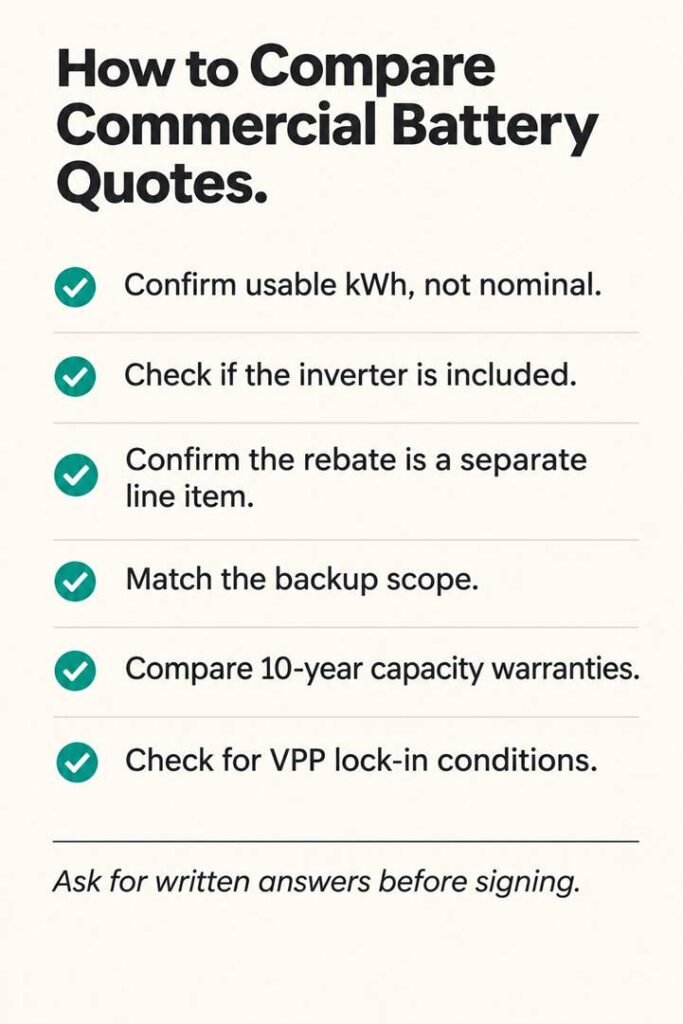
The brand on the box matters less than the system design, installation quality, and warranty terms. Here is how to compare quotes like-for-like.
- Confirm usable kWh, not nominal. A battery advertised at 10 kWh nominal might only deliver 9 kWh usable. Make sure every quote uses the same measure.
- Check whether the inverter is included. Some quotes bundle the inverter; others quote it separately. A “cheaper” quote without an inverter may cost more once you add one.
- Confirm the rebate has been deducted. The federal rebate should appear as a separate line item on your quote. If it is not shown, ask why.
- Match the backup scope. One quote backing up the whole facility is not comparable to another backing up only essential circuits. Clarify what will actually run during a blackout.
- Compare warranty terms. Look for the guaranteed capacity after 10 years. A good battery warranty guarantees around 70% capacity retention after a decade of daily cycling.
- Note any VPP lock-in conditions. Some headline prices come with virtual power plant participation requirements. Understand what you are signing up for.
Eligibility: Who Qualifies in Victoria
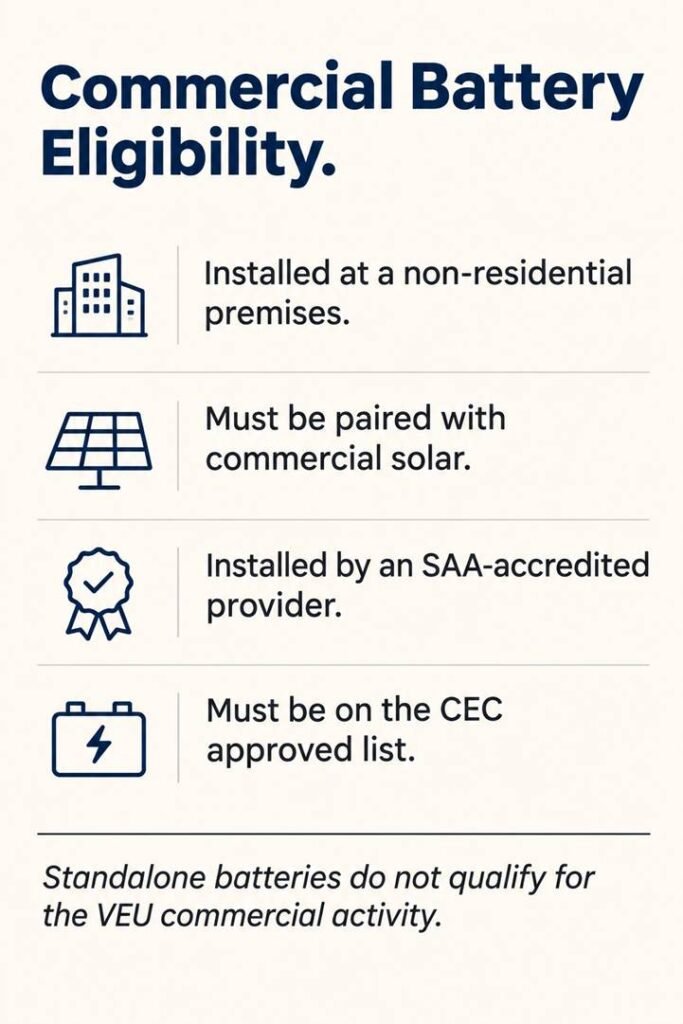
To access the federal rebates in Victoria for commercial premises, you must meet these requirements:
- The battery must be installed with an existing or new commercial solar system
- The battery must be on the Clean Energy Council approved battery list
- Installation must be by a Solar Accreditation Australia (SAA) accredited installer
- The system must be installed at a non-residential premises
Battery systems installed without solar PV (which solely store energy from the grid) do not qualify for the VEU commercial solar activity. For Victorian businesses, the federal incentives is the current rebate pathway.
Why Victorian Businesses Are Acting Now
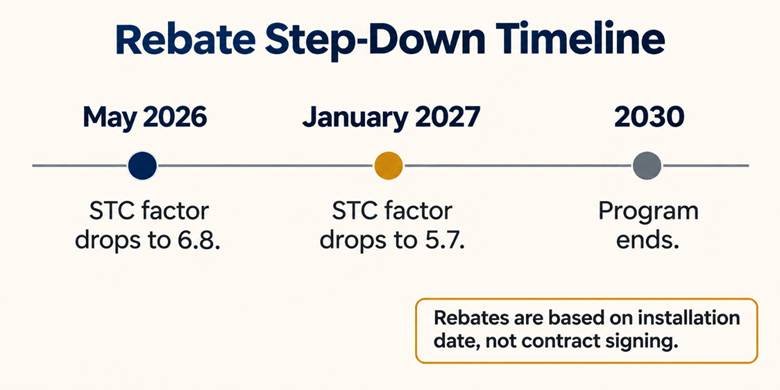
The STC factor declines every six months. From 6.8 in May to December 2026, it drops to 5.7 in January 2027, then 5.2 in July 2027, and continues falling until the program ends in 2030.
Each reduction lowers the rebate value. A commercial battery installed today receives more federal support than the same system installed next year.
The Clean Energy Regulator has also issued warnings to retailers about accurate quotes and honest scheduling as the rebate changes take effect. Rebates are determined by the installation date, not when a contract is signed.
The practical takeaway: If you are planning a battery installation, the financial case is strongest right now.
Get a Commercial Quote
Book a commercial site assessment and we will provide a written quote showing:
- Your specific battery options and installed costs
- The exact federal rebate you qualify for
- Your net out-of-pocket price
- Estimated payback period based on your usage
Call 0468 883 747 or request a commercial quote online.
FAQ
Which battery brand is best for Victorian businesses?
There is no single best brand. Growatt offers strong value in the 20 to 30 kWh range. GoodWe offers flexibility across single-phase and three-phase setups. SOFAR provides competitive pricing on larger systems. The right choice depends on your existing inverter, your operational load profile, and your capital budget.
How much does a commercial battery cost in Victoria after rebates?
A 10 to 13 kWh battery package costs approximately $3,000 to $5,000 net after the federal rebate. A 15 to 20 kWh system costs approximately $4,000 to $6,000 net. A 20 to 30 kWh system costs approximately $5,000 to $8,000 net.
What is the sweet spot for battery size in Victoria?
14 kWh or less receives the full federal rebate rate. Capacity above 14 kWh is discounted to 60%, and above 28 kWh to 15%.
Does Victoria still have a state battery rebate for businesses?
No. The Solar Victoria battery loan program closed to new applications in May 2025. The federal Cheaper Home Batteries Program is the current rebate pathway.
Will the rebate decrease again?
Yes. The STC factor drops from 6.8 to 5.7 in January 2027, then continues declining every six months until 2030.
This article reflects program rules and market data as of 2026. Requirements and certificate prices change, so confirm current details with the Clean Energy Regulator or an SAA-accredited provider before you commit. This is general information, not financial or legal advice.
Other Related Blog
 Lighting
Choosing a commercial solar installer in Melbourne is not like choosing a residential installer. The stakes are higher, the systems are larger, and the complian
 Lighting
Commercial solar rebate eligibility Victoria businesses are checking right now has shifted in 2026. The Victorian Energy Upgrades (VEU) commercial solar discoun
 Lighting
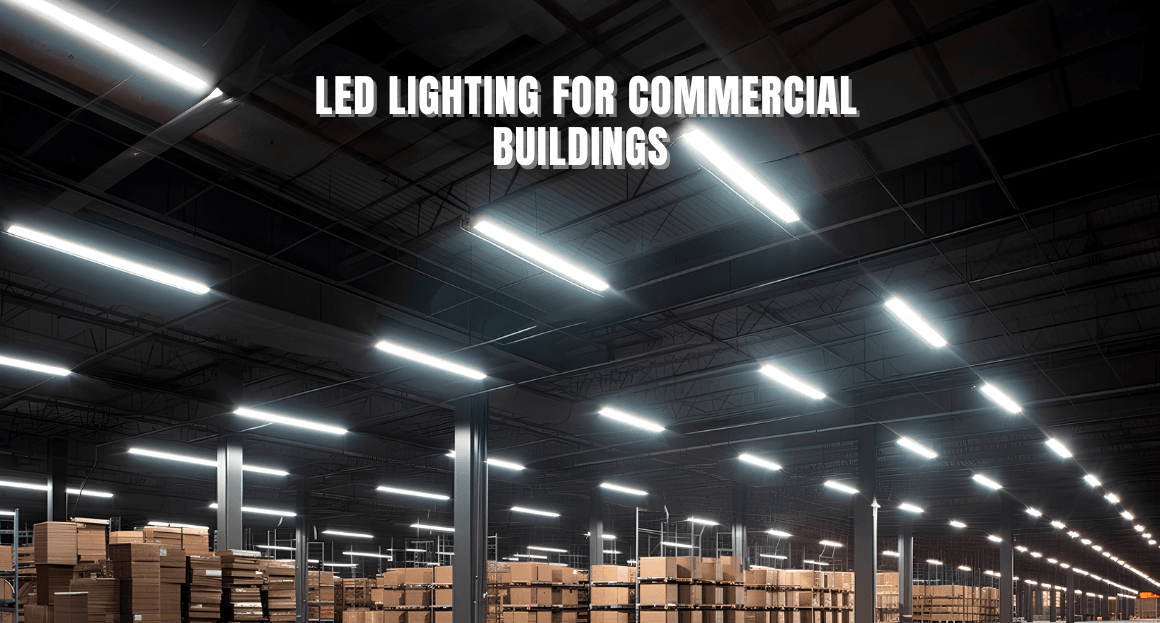
Rising energy bills, increasing stakeholder expectations, ESG reporting obligations, and stricter building performance standards are pushing commercial property
 Lighting
Commercial LED lighting for offices through the Victorian Energy Upgrades (VEU) program is making workplaces brighter, more comfortable, and far cheaper to run
 Lighting
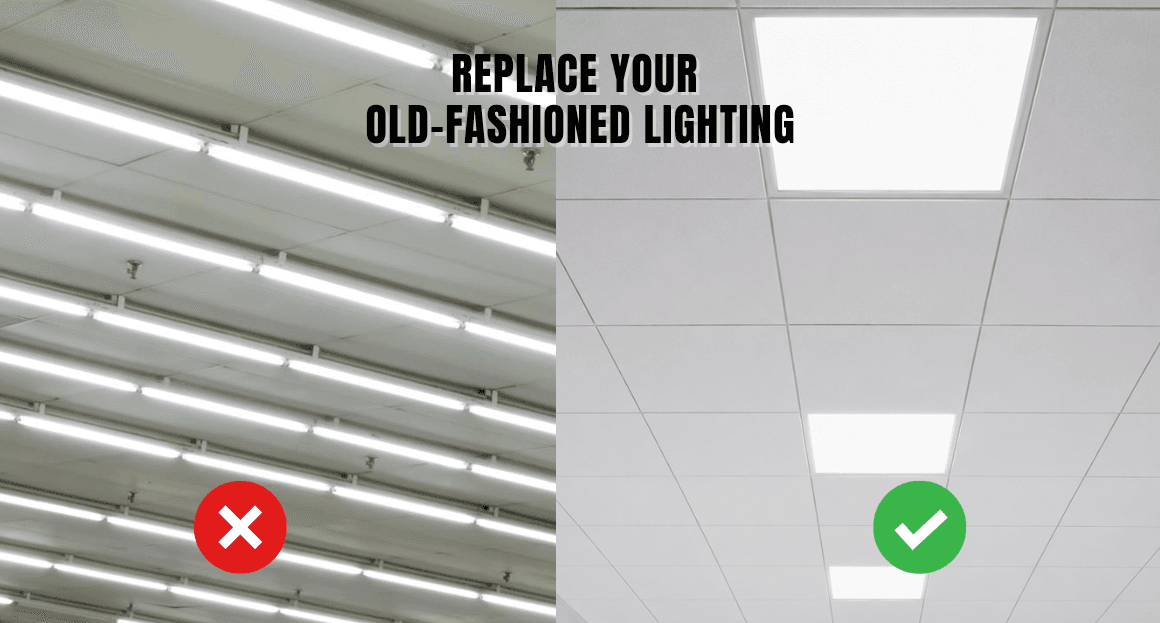
Businesses are now working with a mix of lighting systems. Some properties still run on old fluorescent fittings, while others have halogens, CFLs, metal-halide
Lighting In most cases, existing LED fittings cannot be replaced again under the same rebate category. However, that does not always mean the entire property becomes


Start Your Journey To Energy Independence!
Eco Foot does not authorise unsolicited door-to-door visits, telemarketing calls, or other direct personal contact unless it has been officially arranged or authorised.If you receive an unsolicited visit or call from anyone claiming to represent Eco Foot, please report to us directly so we can investigate and take appropriate action.
